
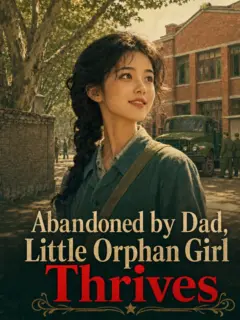
A grown woman wakes up in the starved body of an eight-year-old in 1970, hops a freight train to Shanghai, and moves in on the father who left her behind.
A sharp, satisfying 1970s family drama with a clever heroine and a wonderfully two-faced stepmother. The emotional beats land, though the stepmother's scheming gets repetitive and there's no romance yet.
First 10 chapters verdict
Strong, warm opening. A comfortable, well-paced read with a heroine worth rooting for.
Read it if you like
What works so far
- The opening
- Su Xiaomei
- Period detail
- Real warmth
What holds it back
- Repetition
- Easy villains
- Small translation slips
This review covers chapters 1 to 10 only, with no spoilers past chapter 10.
The premise, in our words
Lin Miaomiao has spent a month in the body of an eight-year-old village girl, and she’s done with it. The original Miaomiao was left behind in the countryside by her father, Lin Dahai, and spent eight years as the family servant: beaten, starved, kept out of school, sleeping in a woodpile shelter. Her father, meanwhile, remarried in Shanghai, became a deputy director at the Shanghai Number One State-Owned Food Factory, and raised a pampered pair of five-year-old twins. Armed with an adult’s mind, a return address from an intercepted letter and a secret stash of money, Miaomiao sets out to claim her place in the city before the Reform and Opening Up era arrives.
What happens in chapters 1 to 10
The opening scene is great. Filthy, skeletal and reeking after three days hopping freight trains, Miaomiao waits for rush hour at the factory gate, then turns on the tears in front of the guards and a growing crowd of workers’ wives. She tells them she’s looking for her pa, Lin Dahai, and lets the gossiping crowd fill in the rest. The kind guard Li Dazhuang takes her to Vice Factory Director Zhang Shan, a former soldier who asks if she’s hungry. That one gentle question finally breaks her, and she sobs for real.
The factory-gate scene is a masterclass in a small girl working a crowd.
Her stepmother, Su Xiaomei, arrives looking crisp and polished and instantly smooths over Zhang’s anger with apologies. Behind closed doors, the smile vanishes. Miaomiao gets a cold order to bathe, a bundle of discarded clothes and a warning not to touch anything. In the washroom we learn her secret: over 1,200 yuan sewn into her underclothes, an enormous sum when a worker earns thirty or forty a month. She took it from her grandparents, leaving a fifty behind and planting hints so her bullying cousin Lin Dabao will get the blame.
The story cuts between Shanghai and the village, where Grandma Wang Guixiang rages about undone chores before slowly realizing the girl has run. Xiaomei calls the village from a distant phone booth so no neighbors overhear. Grandma promises to take the girl back, while secretly scheming to keep Dahai’s ten yuan a month in child support.
At dinner, Xiaomei calls Miaomiao a “starved ghost” for eating too fast. Miaomiao finally answers back, calmly, calling her “Stepmother” to her face and promising she’ll eat elegantly once she’s made something of herself. From there it’s open war. Xiaomei skips breakfast and leaves her a few dimes. Miaomiao thanks the guard properly, gets treated to breakfast, buys a city map with five cents, and learns which neighbors to trust.
Office gossip about the sent-down youth policy shows Xiaomei the real threat: city jobs must be bought, and a third child could eat her twins’ future. She buys Miaomiao a one-way ticket back to Su Province, and walks straight into Dahai returning early from a trip. In chapter 10, Dahai turns out to genuinely care for his eldest daughter. He brings her pastries, tells the twins she’s their real sister and is staying for good, and orders a reunion feast with the saved meat coupons, while the ticket digs into Xiaomei’s chest.
The main character
Miaomiao is shrewd, patient and very funny in her inner voice. She performs helplessness when it’s useful but drops the act when pushed, and she plans years ahead. What keeps her likable is gratitude: she remembers every kindness and thanks people properly.
What works
- The opening. The factory-gate scene is a masterclass in a small girl working a crowd.
- Su Xiaomei. A brilliantly two-faced stepmother, kind in public and icy at home, with motives that make sense.
- Period detail. Ration coupons, White Rabbit candies, factory housing and the sent-down youth fears give the 1970s setting real texture.
- Real warmth. Zhang Shan, Li Dazhuang and, surprisingly, Dahai bring genuine kindness that hits hard after so much cruelty.
What doesn’t
- Repetition. Xiaomei’s resentment is restated in nearly every chapter in similar words.
- Easy villains. The village grandparents are pure cruelty with no nuance.
- Small translation slips. At one point Miaomiao is “as quiet as An Jing”, a name that should have been translated as “quiet”.
Who it’s for
Readers who enjoy period family dramas, transmigration into a mistreated child, and slow, satisfying wins over a scheming stepmother. If you like stories where a smart heroine climbs from nothing through patience and planning, this fits.
Our verdict on the first 10 chapters
Strong, warm opening. Xiaomei still has that train ticket, the village will soon notice its missing money, and we want to see Miaomiao start school. It’s a comfortable, well-paced read with a heroine worth rooting for.
We read the first 10 chapters and score the opening only. No spoilers past chapter 10.